
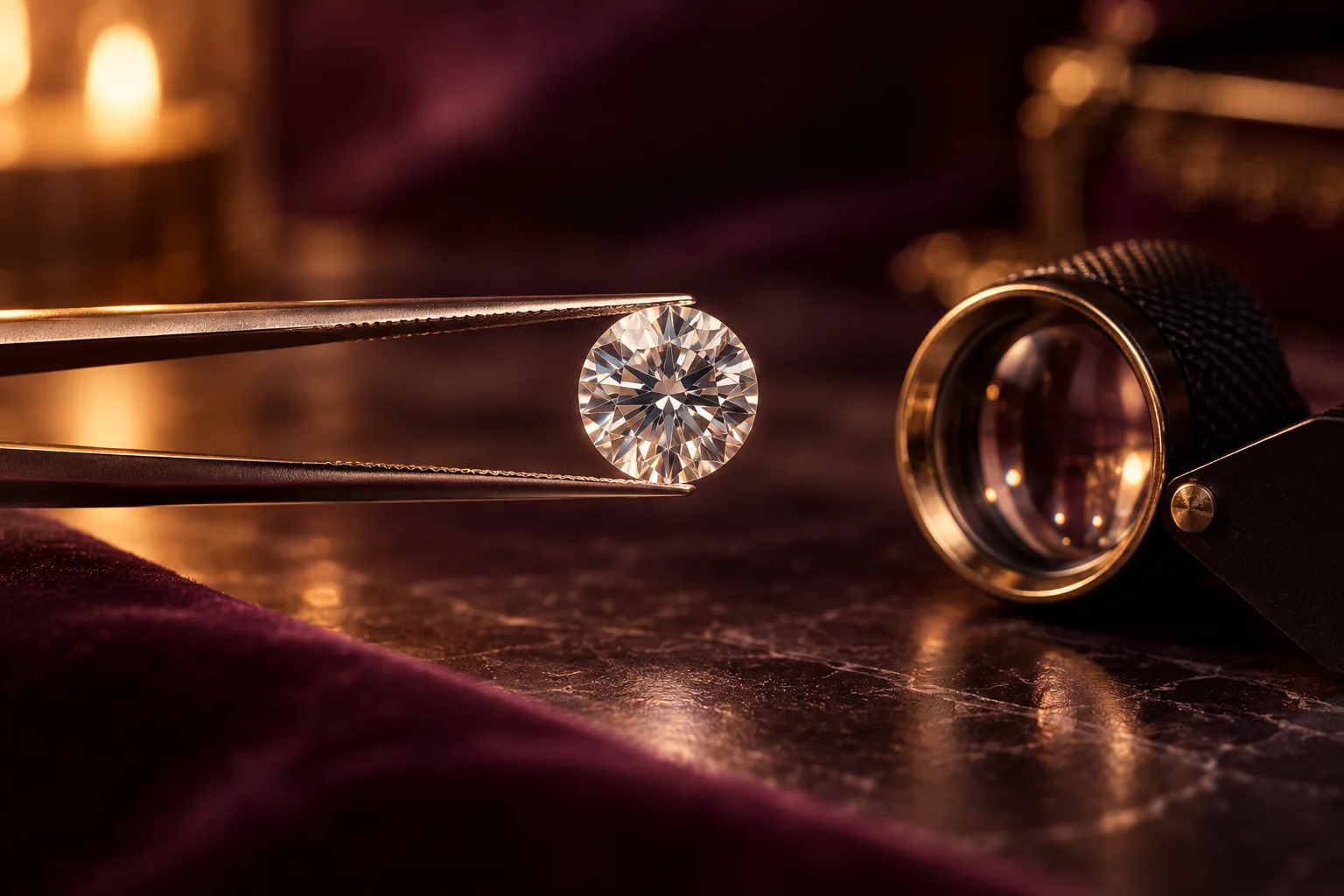
A lab-grown diamond is a diamond. It is made of the same carbon atoms, arranged in the same crystal, with the same hardness, brilliance and fire as a diamond that formed underground.
How it is grown
A tiny slice of diamond, called a seed, is placed in a chamber that recreates the heat and pressure — or the carbon-rich atmosphere — in which diamonds form. Over a few weeks, carbon builds up on the seed layer by layer until a rough crystal has grown. It is then cut and polished exactly as a mined stone would be.
Can anyone tell the difference?
Not by eye, and not with a jeweller's loupe. Only specialised laboratory equipment can tell a lab-grown diamond from a mined one, which is why every stone we set is graded and identified by IGI or GIA.
Why it costs less
A mined diamond passes through many hands before it reaches a shop window, and each adds a margin. A lab-grown diamond has a short, traceable journey, and we sell ours directly. The stone is the same; the path is shorter.
Will it last?
Yes — it is as hard and durable as any diamond, and it will not cloud, fade or change colour.